
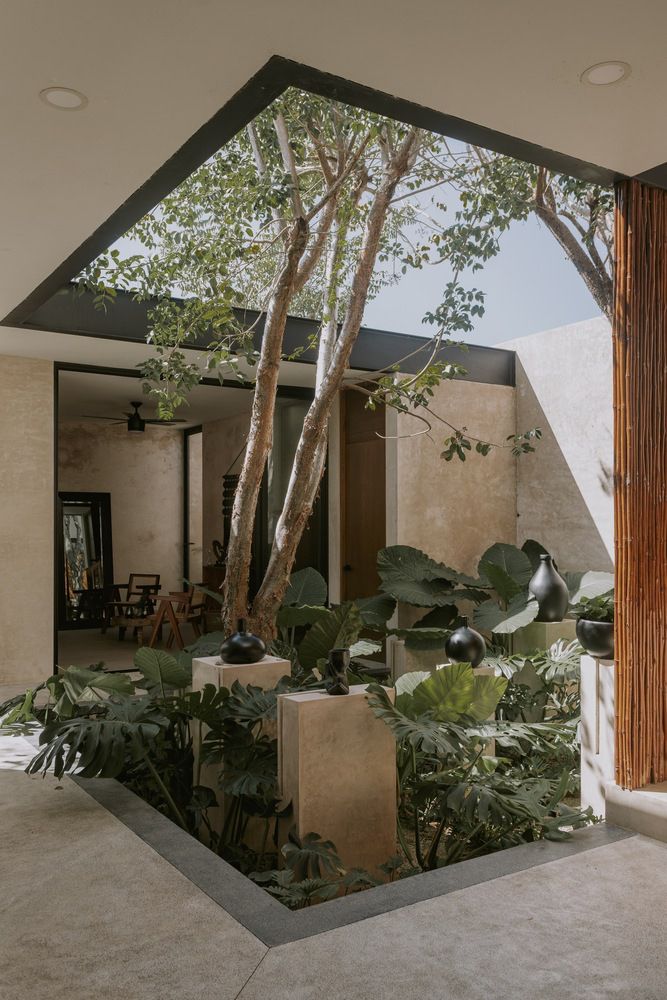
In the evolving landscape of contemporary Indian living, the home has become a dynamic space — one that adapts to work, rest, gathering, and reflection. As our lifestyles continue to shift, the way we design our interiors must respond with equal sensitivity. Sustainability, in this context, is not merely an environmental consideration; it is a design philosophy rooted in longevity, responsibility, and relevance.
At Aranya Collective, we view sustainable interiors as an approach that goes beyond material choices. It is about creating spaces that are climate-responsive, contextually grounded, and deeply aligned with the rhythms of everyday life.
Designing with Context
Modern Indian homes are shaped by a unique intersection of climate, culture, and urban realities. A sustainable interior must respond to these layers rather than impose a universal aesthetic. This may mean designing for cross-ventilation in warmer climates, allowing daylight to penetrate deeper into the space, or incorporating materials that remain thermally comfortable throughout the year. It is an approach that acknowledges place — where the home is located, how it is used, and who inhabits it.
Good design begins with context.
Materiality and Longevity
Material selection lies at the heart of sustainable interiors.
Locally sourced stone, natural wood, cane, lime-based finishes, clay textures, and handcrafted elements offer both environmental and aesthetic value. These materials not only reduce embodied impact but also bring authenticity and tactile richness to a space. Equally important is durability. Sustainable design prioritizes finishes and furnishings that age gracefully, resisting the need for frequent replacement. A well-designed interior should feel as relevant years later as it does on the day it is completed.
Light, Air, and Spatial Flow
A sustainable home performs as well as it looks. The thoughtful orchestration of natural light, ventilation, and spatial openness can significantly reduce dependency on artificial systems. Interiors that allow light to travel, spaces that breathe, and layouts that remain uncluttered contribute to both energy efficiency and well-being. In the Indian context, where climatic conditions vary significantly, these principles become integral to creating truly responsive homes.
Designing for Everyday Life
Sustainability is also about designing around real patterns of use. Furniture, storage, and spatial planning must be intuitive, multi functional, and built for longevity. In urban Indian homes, where space is often a premium, every element must serve a purpose without compromising on aesthetics. A home that is thoughtfully planned reduces excess, improves efficiency, and supports evolving lifestyles over time.
A Timeless Design Ethos
For us, sustainability is inseparable from timelessness. Trends fade, but spaces designed with clarity, restraint, and purpose continue to resonate. By grounding interiors in material honesty, contextual sensitivity, and enduring aesthetics, we create homes that remain relevant across years and generations.
Sustainable interiors are not simply about building responsibly — they are about crafting spaces with intention, where design, function, and environmental consciousness coexist seamlessly.